

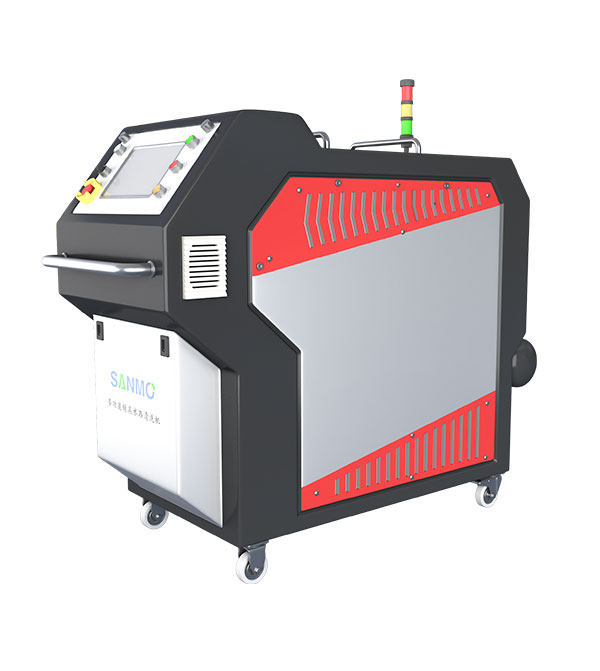
Mold Cleaning Machine Manufacturer and Equipment Customization Options
Industry Background and Market Demand
Mold cleaning is a critical process in industries such as automotive, aerospace, electronics, and consumer goods manufacturing. Over time, molds accumulate residues, including release agents, plastic remnants, and oxidation layers, which degrade product quality and reduce mold lifespan. Traditional cleaning methods—such as manual scrubbing, chemical baths, or abrasive blasting—are labor-intensive, inconsistent, and environmentally hazardous.
The demand for automated mold cleaning machines has surged due to the need for precision, repeatability, and compliance with stringent environmental regulations. Manufacturers increasingly seek customized solutions to address specific mold geometries, materials, and contamination types. This trend has driven innovation in cleaning technologies, including laser, dry ice, and ultrasonic systems.
Core Technologies in Mold Cleaning Machines
Modern mold cleaning equipment employs several advanced technologies, each suited to different applications:
1. Laser Cleaning – Uses pulsed or continuous-wave lasers to vaporize contaminants without damaging the substrate. Ideal for delicate molds with intricate details.
2. Dry Ice Blasting – Projects frozen CO₂ pellets that sublimate upon impact, leaving no secondary waste. Effective for removing organic residues without abrasion.
3. Ultrasonic Cleaning – Submerges molds in a solvent agitated by high-frequency sound waves, suitable for small, complex parts.
4. Abrasive Blasting – Utilizes media like aluminum oxide or glass beads for heavy-duty cleaning but requires careful pressure control to avoid surface damage.
Each method has trade-offs in speed, cost, and environmental impact, necessitating careful selection based on application requirements.
Equipment Structure, Materials, and Manufacturing Processes
A typical industrial-grade mold cleaning machine consists of:
- Cleaning Chamber/Workstation – Designed to accommodate various mold sizes, often with adjustable fixtures.
- Automated Handling System – Robotic arms or conveyor belts for consistent cleaning cycles.
- Filtration and Extraction Unit – Captures airborne particles and fumes, ensuring operator safety and regulatory compliance.
- Control Interface – Programmable logic controllers (PLCs) or touchscreen panels for parameter adjustments.
High-performance machines use corrosion-resistant materials (e.g., stainless steel, anodized aluminum) and precision-engineered components to ensure durability. Manufacturing involves CNC machining, laser cutting, and rigorous quality testing to meet industry standards like ISO 9001.
Key Factors Affecting Performance and Quality
Several variables influence the effectiveness of mold cleaning equipment:
- Cleaning Medium Selection – Incorrect abrasive or solvent choice can damage molds or leave residues.
- Process Parameters – Laser power, blasting pressure, and exposure time must be optimized for different contaminants.
- Maintenance Requirements – Regular servicing of nozzles, filters, and moving parts prevents downtime.
- Operator Training – Improper handling reduces efficiency and increases wear.
Supplier Selection Criteria for Manufacturers
When sourcing mold cleaning machines, manufacturers should evaluate suppliers based on:
1. Technical Expertise – Proven experience in designing equipment for similar applications.
2. Customization Capabilities – Ability to modify cleaning heads, chamber dimensions, or automation features.
3. Regulatory Compliance – Certifications for workplace safety (OSHA, CE) and environmental standards (EPA, REACH).
4. After-Sales Support – Availability of spare parts, maintenance contracts, and troubleshooting assistance.
Leading suppliers often provide pilot testing to validate performance before full-scale deployment.
Common Industry Challenges and Pain Points
Despite technological advancements, several pain points persist:
- High Initial Investment – Advanced laser or robotic systems require significant capital expenditure.
- Residue Management – Some methods generate secondary waste (e.g., spent abrasives), increasing disposal costs.
- Compatibility Issues – Not all machines are suitable for composite or coated molds without risk of damage.
- Energy Consumption – High-power systems may lead to elevated operational costs.
Application Scenarios and Case Studies
1. Automotive Industry – A Tier-1 supplier adopted dry ice blasting to clean injection molds for dashboards, reducing cycle times by 40% compared to manual cleaning.
2. Medical Device Manufacturing – Ultrasonic cleaning ensured sterile, residue-free molds for silicone implants, meeting FDA hygiene standards.
3. Aerospace Components – Laser cleaning removed carbon deposits from titanium molds without altering dimensional tolerances.
Current Trends and Future Outlook
The mold cleaning equipment market is evolving with:
- AI-Driven Process Optimization – Machine learning algorithms adjust cleaning parameters in real-time for maximum efficiency.
- Sustainable Solutions – Waterless and chemical-free methods gain traction due to stricter environmental policies.
- Modular Designs – Interchangeable cleaning heads allow one machine to support multiple technologies (e.g., switching between laser and blasting).
Future developments may include hybrid systems combining multiple cleaning methods and increased adoption of IoT for predictive maintenance.
FAQ: Mold Cleaning Equipment
Q1: How often should molds be cleaned?
A: Frequency depends on material buildup and production volume. Some manufacturers clean after every cycle, while others schedule maintenance weekly.
Q2: Can one machine handle different mold sizes?
A: Yes, customizable fixtures and adjustable chambers allow flexibility, but large-scale molds may require bespoke solutions.
Q3: What is the typical ROI for automated cleaning systems?
A: Payback periods range from 1–3 years, factoring in labor savings, reduced scrap rates, and extended mold life.
Q4: Are there portable mold cleaning options?
A: Yes, handheld laser or dry ice units are available for spot cleaning but lack the throughput of industrial systems.
By understanding these factors, manufacturers can select or develop mold cleaning machines that enhance productivity while minimizing operational risks.
@2024 Công ty TNHH Máy móc chính xác Shanmo (Kunshan). Mọi quyền được bảo lưu. Máy làm sạch khuôn đường thủy,
máy làm sạch khuôn điện phân, nhà sản xuất máy làm sạch khuôn
ĐT:+86 512-55001520
whatsapp:+86 15599099006 / +86 15599099098
E-mail:sanmo030788@gmail.com
Thêm vào:KHÔNG. Số 56, đường yang carapace, thị trấn Chu, thành phố Côn Nam Sơn, tỉnh Giang Tô


Trang web này sử dụng cookie để đảm bảo bạn có được trải nghiệm tốt nhất trên trang web của chúng tôi.
 English
 Español
 Pусский
 العربية



 Điện thoại
 Thư
Thư
Bình luận
(0)